DIRECT.
THE WAY…2030!
An immersive B2B event focused on the future of DIRECT, which transformed the CEO's strategic keynote into a spatial audiovisual experience. The project was led by event agency YEZEDE, featuring architectural design by NIKOLA ARCH and technical production by AUDIOLIGHT.
IDEA VISUALIZE studio joined as the creative AV partner, developing the event's audiovisual language, narrative layers, and content for large-format projections across multiple formats.

Annual Awards 2026 - ČEA
Awarded to YEZEDE
event agency.
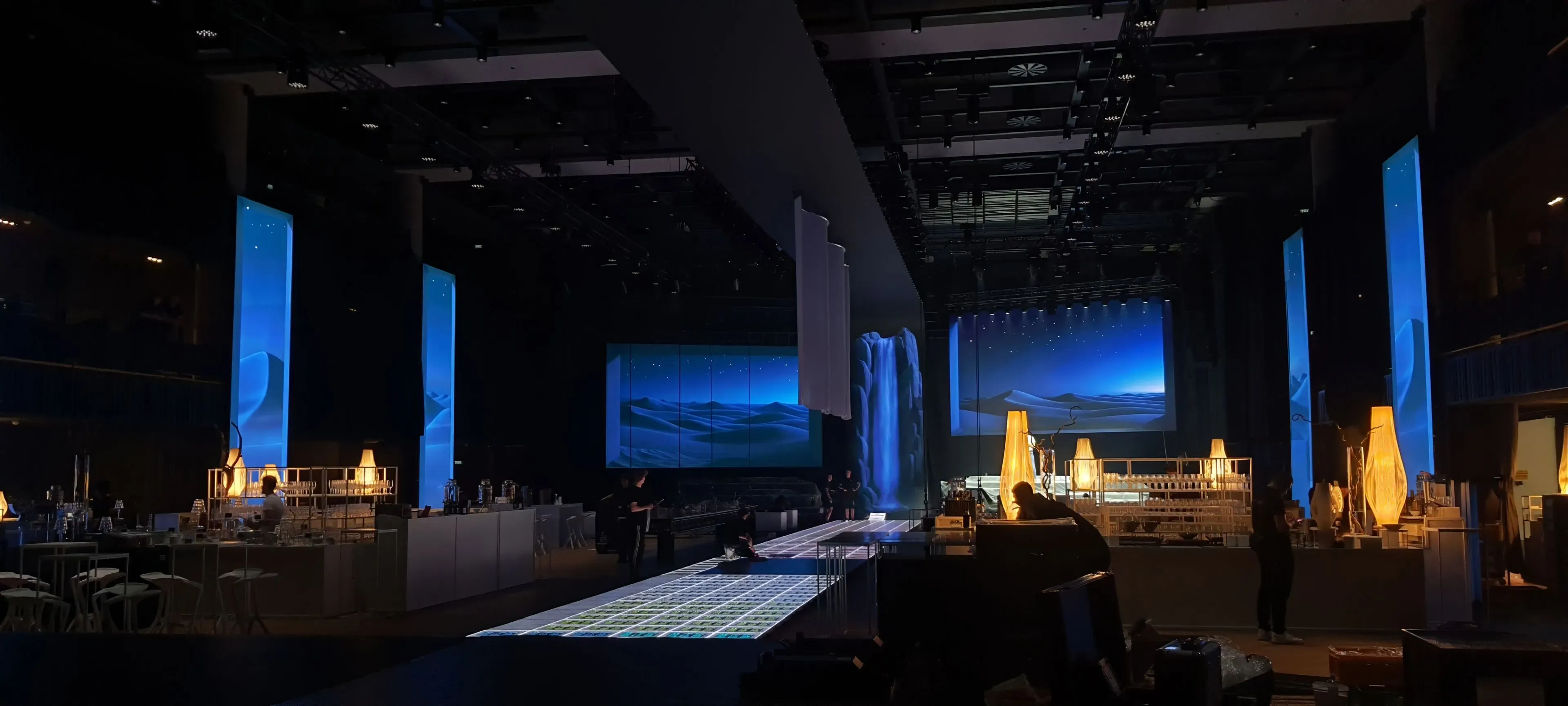


CONCEPTUAL PILLARS OF THE AV EXPERIENCE
The event’s conceptual framework, spatial design, content, and core dramaturgical principles were developed under the leadership of YEZEDE agency in collaboration with NIKOLA ARCH architecture studio. IDEAVIZ was tasked with expanding these concepts into a specific audiovisual language—creating visual worlds, motion sequences, VFX layers, projection content, and visual metaphors capable of carrying the evening's message across space, time, and emotion. The audiovisual content of the entire evening relied on three fundamental, interconnected narrative chapters:

Direct. The Way…2030!
Our task was not merely to create "pretty videos and images." It was essential to analyze and structure a vast amount of strategic, technological, and corporate information, translate it into the visual dramaturgy of the evening, and deliver content that supported and illustrated the live presentation by CEO Pavel Řehák. The visual language seamlessly aligned with the space's architecture, the overall event direction, and the narrative of an exceptional evening attended by more than 600 guests.
The Direct Way
DIRECT 2030!
& vision of the future.
DIRECT 2030!
& vision of the future.
Direct. The Way…2030! was no ordinary corporate presentation. It was a live, spatial, and intensely audiovisual experience, where the strategic vision of Direct was transformed into a tangible vision of the year 2030.
The project was created under the creative and production leadership of the YEZEDE agency for the client Direct Group.
IDEAVIZ partnered on the project as the creative AV partner, driving audiovisual content, narrative development, visual concept, animation, VFX, CGI, AI motion design, and content preparation across multiple projection formats.
AV by IDEAVIZ
Our task was not merely to create "pretty videos." It was essential to analyze and structure a vast amount of strategic, technological, and corporate information, translate it into the visual dramaturgy of the evening, and deliver content that precisely supported the live presentation by CEO Pavel Řehák, the space's architecture, and the overall event direction.


AV PRE-PRODUCTION
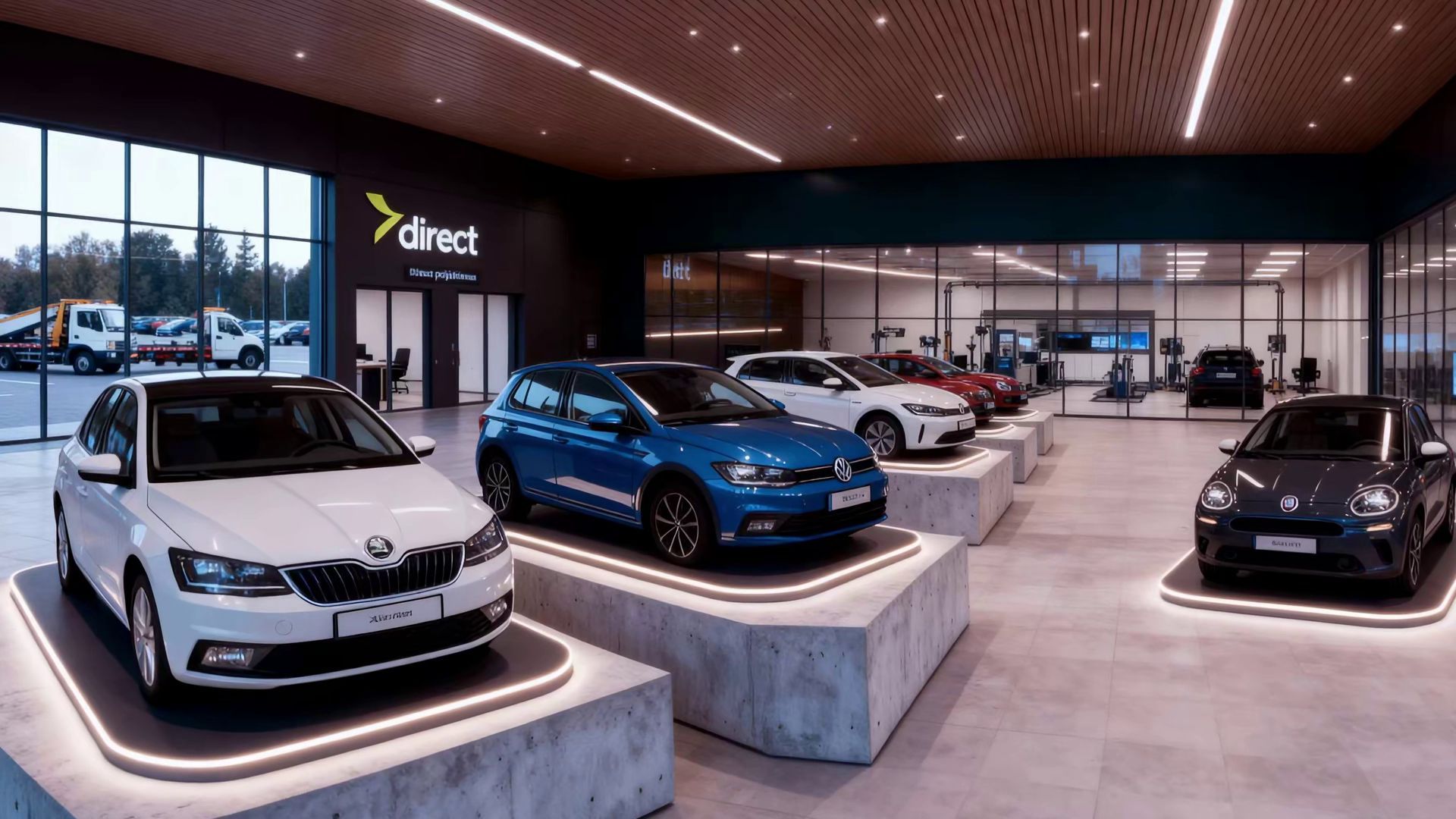
As part of the AV pre-production phase, we translated YEZEDE's script, the evening's dramaturgy, and the spatial architecture into a specific audiovisual language. This involved creating visual concepts, mood boards, animatics, projection format tests, and master assets to coordinate the content with architecture, direction, and technical production.
The entire pre-production phase took place on a highly accelerated timeline. With minimal time available to analyze the script, design the visual language, verify formats, and prepare the initial production deliverables, efficiency was paramount. This demanded rapid orientation within the brief, the ability to structure a vast amount of information, and continuous alignment with the YEZEDE agency, the client, the architecture studio, and the technical team.
The ultimate goal was to ensure that the visual content did not just function in isolation, but as an integral part of the physical space, the CEO's live keynote, and the overall event experience.

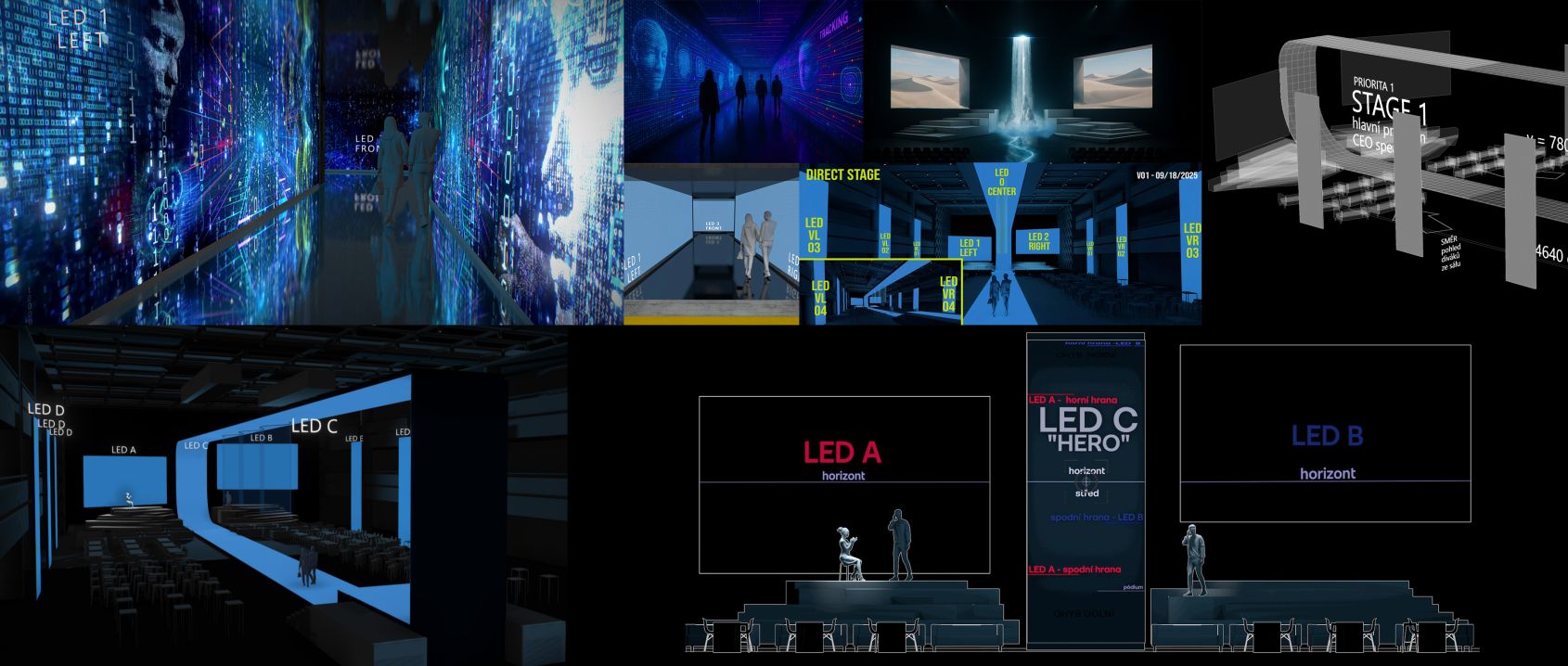
<<< Pre-Concept // Content Timeline >>>

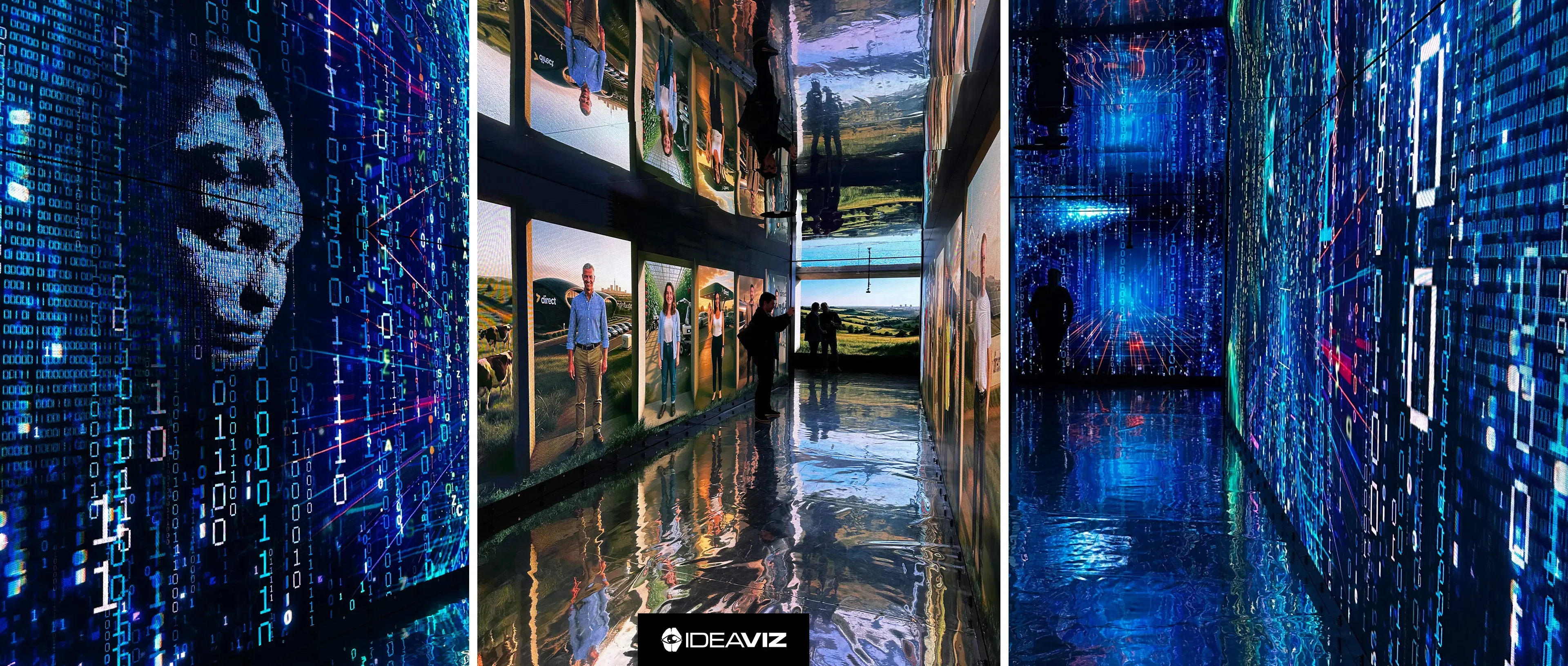
INTRO TUNNEL
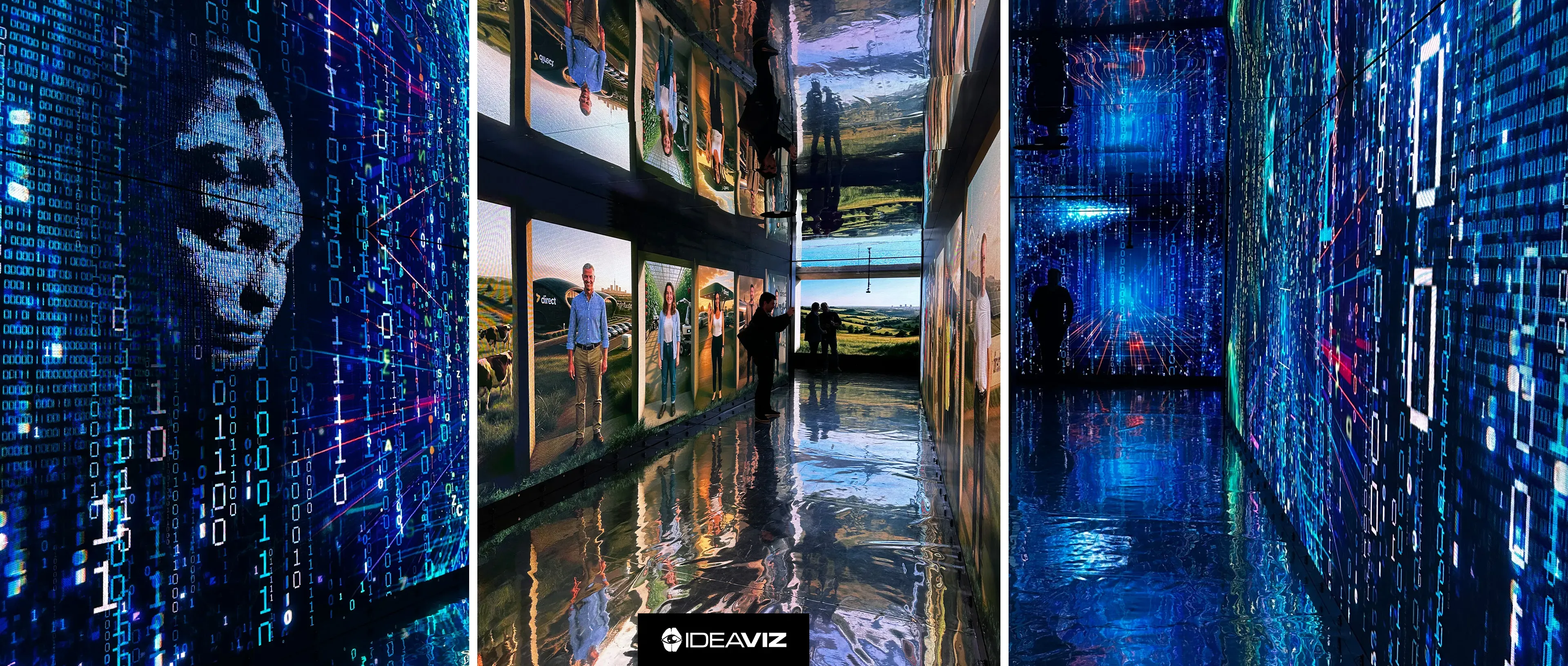
The introductory tunnel centered around the motif of digital overload—a technological deluge of automation, data, and anxieties surrounding the year 2030 as a space of absolute digital dominance.
At the end of the tunnel, attendees encountered their own image decomposed into ones, zeros, and digital noise. The effect resembled a futuristic "black mirror"—the human presence remains, yet is transformed into a mere data footprint trapped within technology.
The tunnel functioned as an introductory contrast. It primed the audience for a high-tech show, only to immediately subvert that expectation; upon emerging from the tunnel, guests found themselves in the calm, airy, and human-centric environment of the main hall.
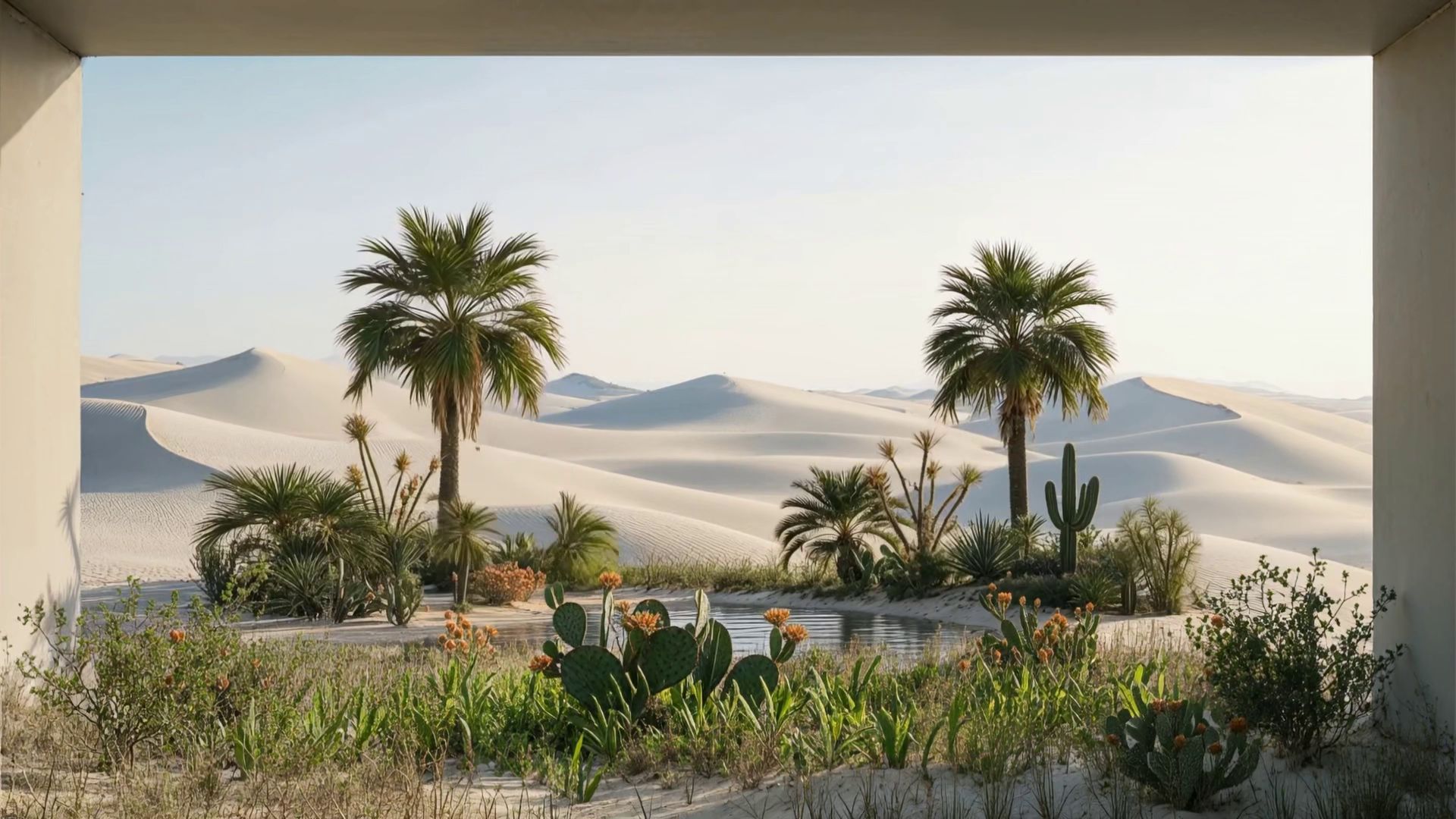
LANDSCAPE of VISION
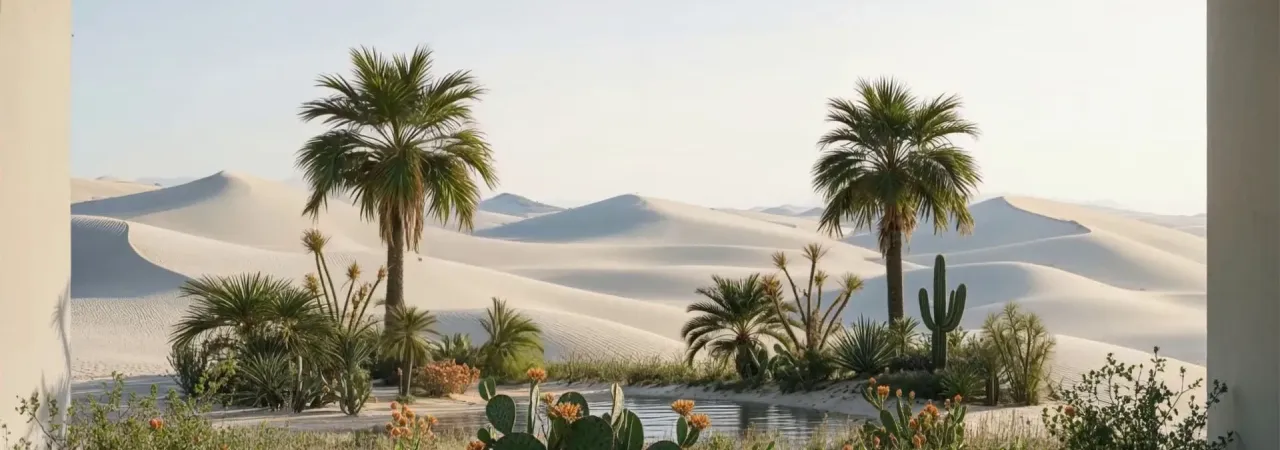
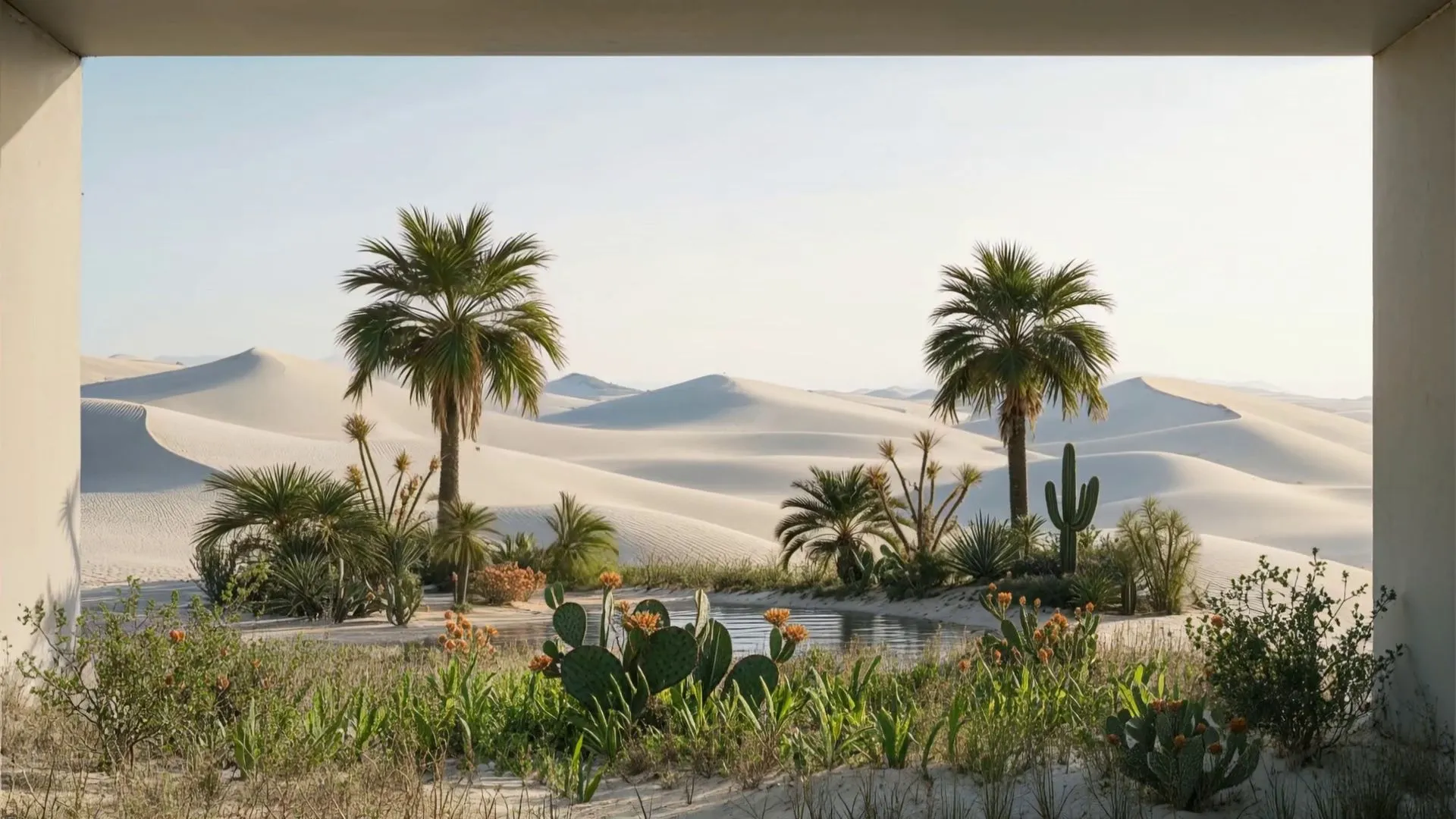
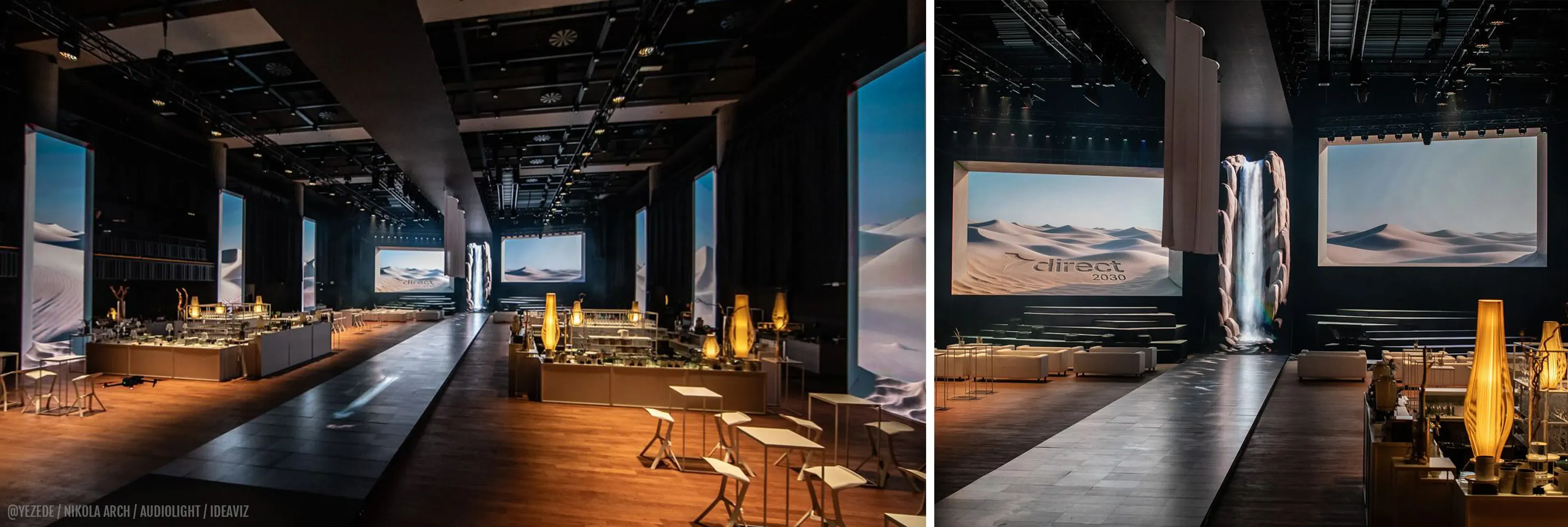
The main event space featured a meditative desert landscape defined by a dominant waterfall, a day-and-night cycle, and the gradual awakening of the environment. The atmosphere of this landscape was further heightened by a meditative soundscape crafted by the audio design team at SYPE Studios.
On the distant horizon, audiovisual backdrops appeared like a mirage, setting the stage for three dramatic live performances. These acts illustrated real-life situations, customer needs, and Direct’s everyday services. For these moments, IDEAVIZ designed the digital environments—visual scenes that seamlessly integrated the live-action performances with the event’s overall visual universe.
Subsequently, infographic layers, symbols of growth, and visualizations of Direct’s expanding service portfolio emerged within the desert. The sand served as a natural canvas for transitions, revealing tracks, lines, and imagery of future development.
These sequences transitioned into images of the year 2030—showcasing the evolution of upcoming services, environments, and visions that gradually became tangible throughout the evening.

DIRECT 2030!
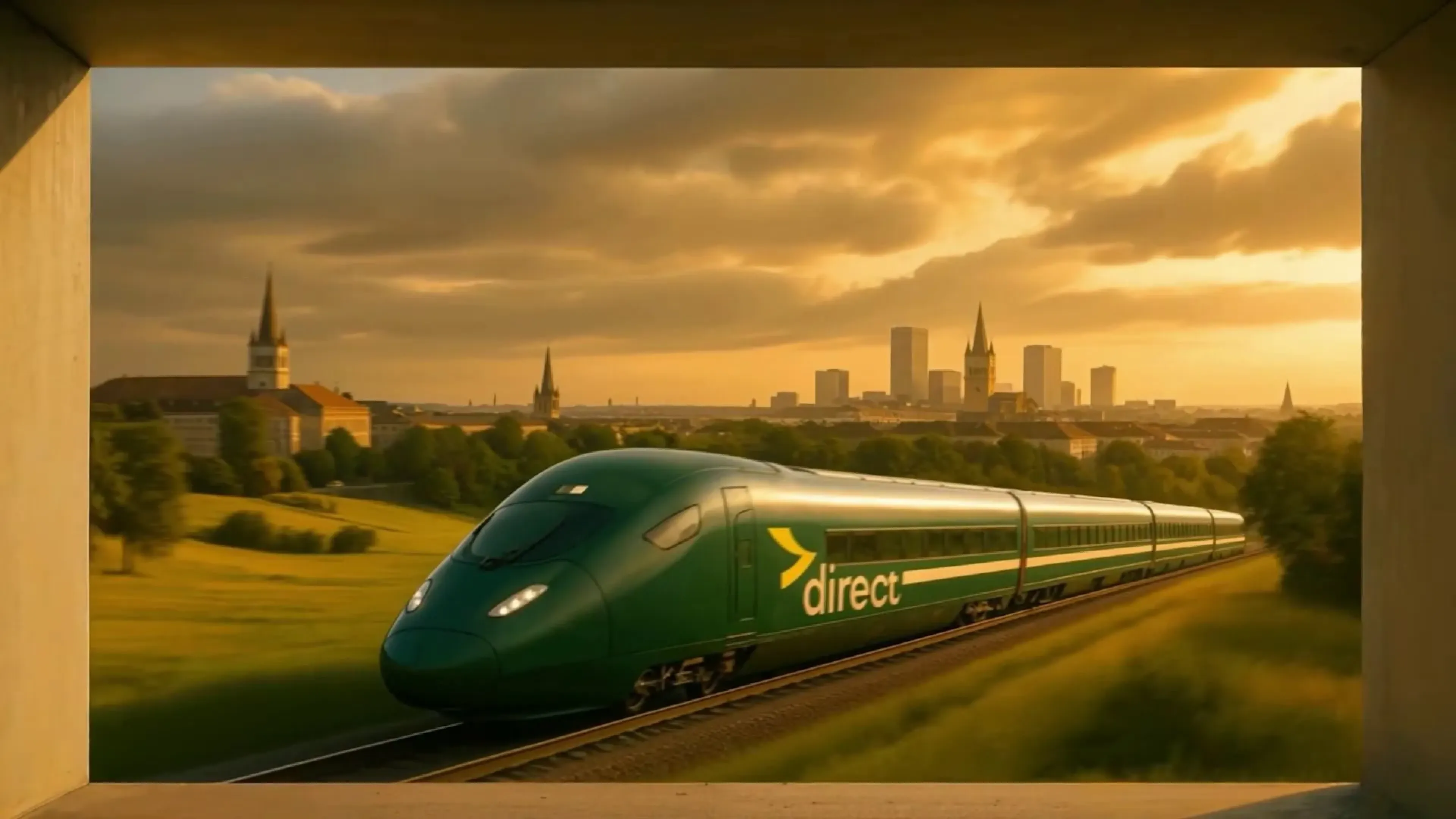
The grand finale of the event featured a manifesto keynote by CEO Pavel Řehák, accompanied by a visual sequence of futuristic 2030 visions seamlessly woven into the landscape.
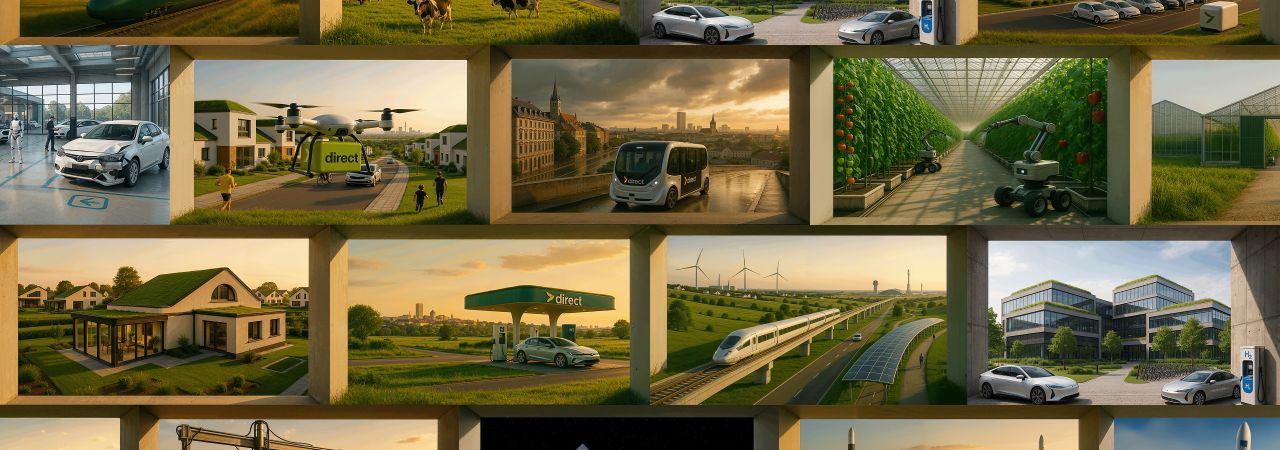
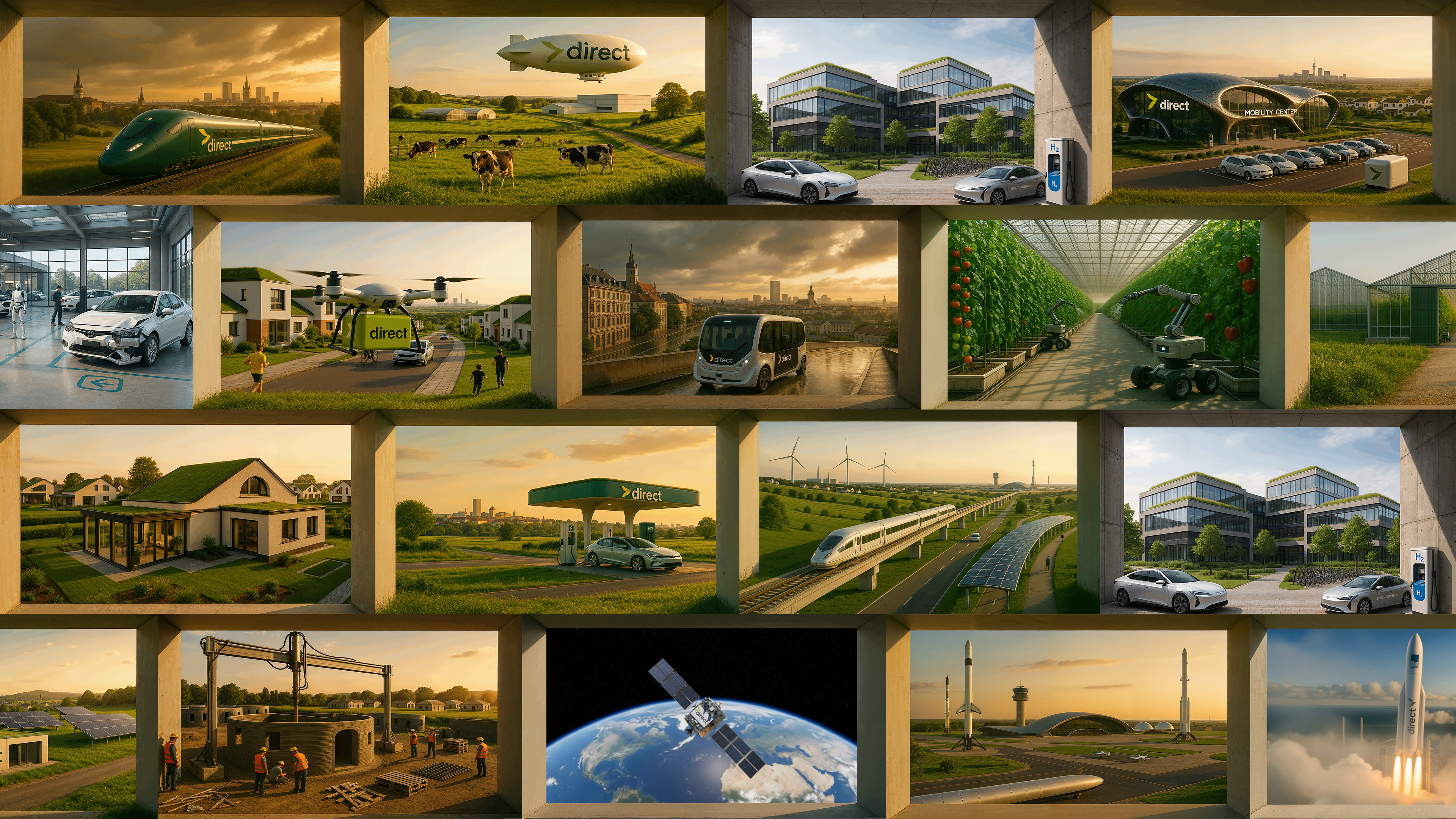
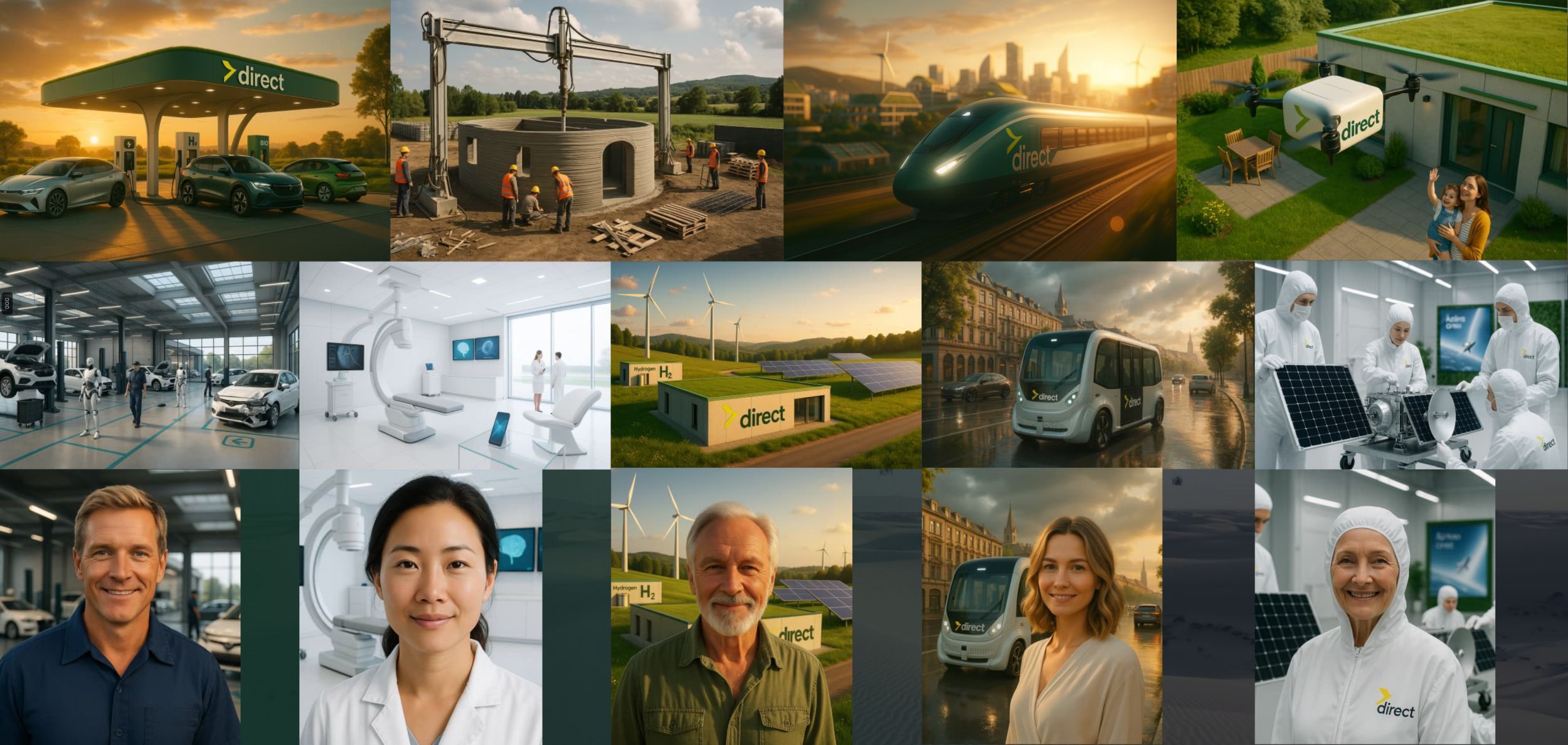
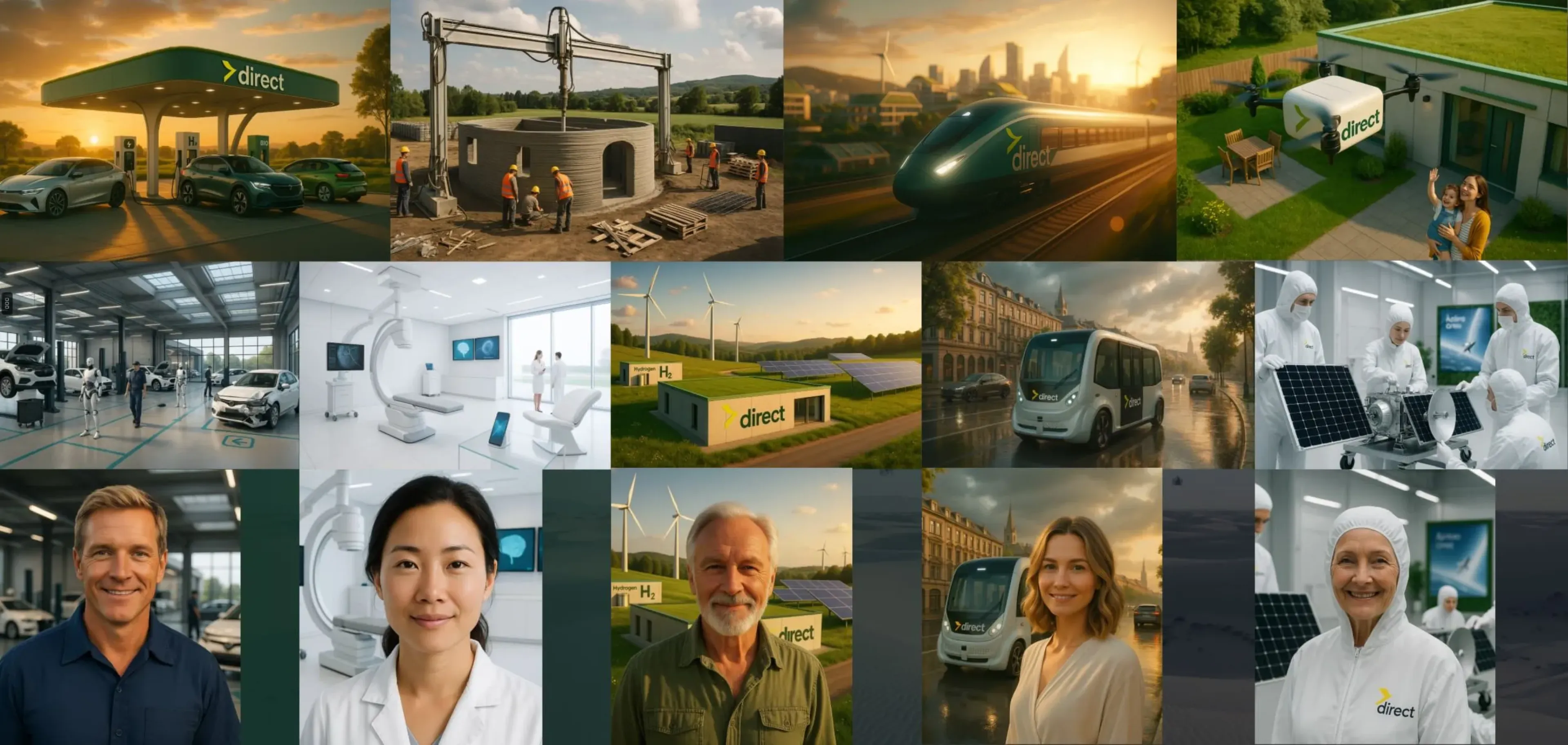
The sequence guided the audience from a familiar, recognizable world toward the open horizon of tomorrow. It began within a landscape close to the present day—navigating through villages, agricultural terrain, residential areas, transport, and local energy grids. Here, the future was not depicted as an alienated sci-fi trope, but as a natural extension of everyday life.
Step by step, individual layers of the year 2030 etched themselves into the landscape: modern mobility, autonomous transport, new energy sources, smart construction, service and mobility hubs, data infrastructure, communication networks, and automated robotic systems. Technologies did not appear as isolated objects, but always within a specific environment—serving people, businesses, cities, and the environment.
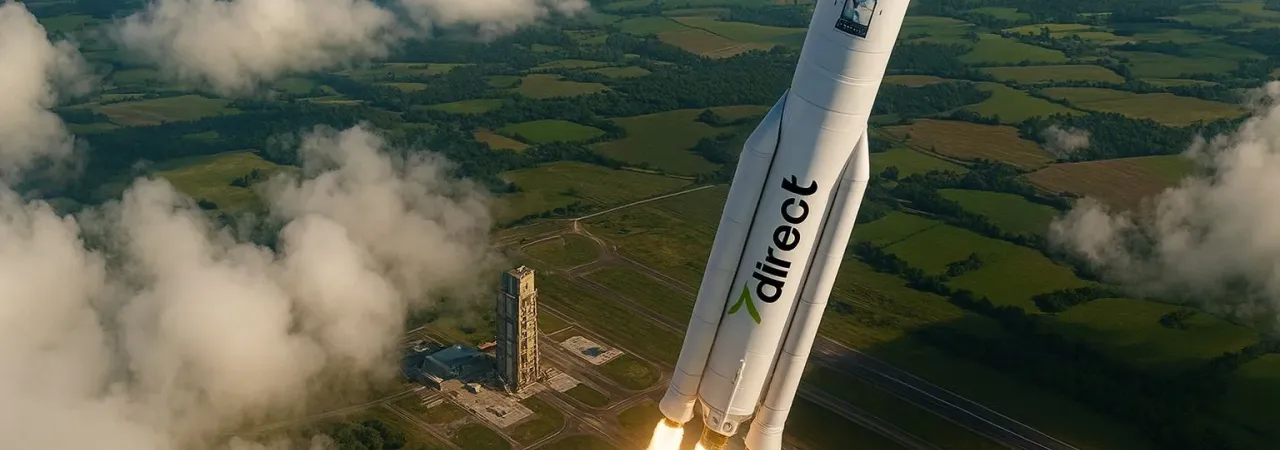
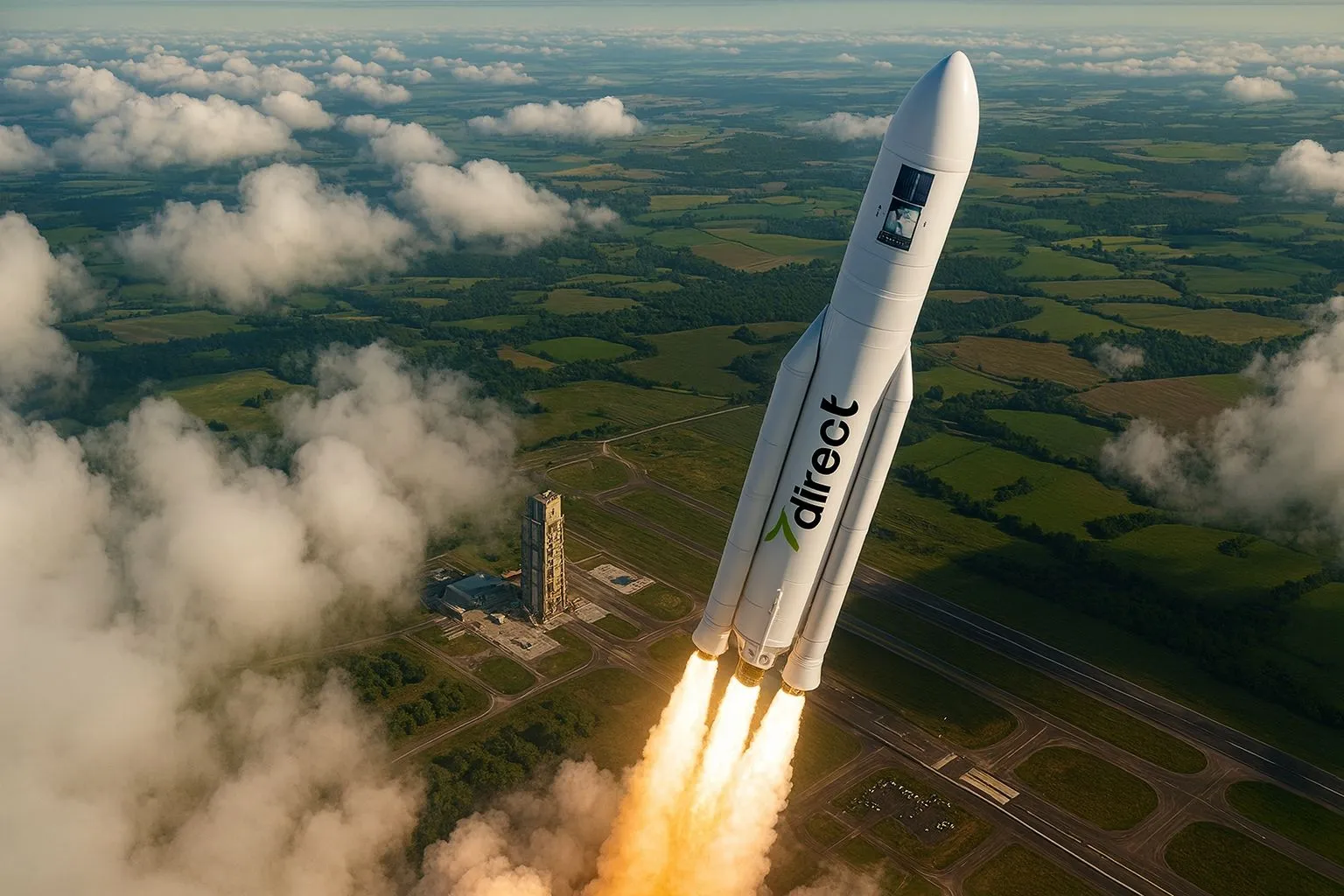
The scale of the vision expanded progressively. It scaled up from an individual house and local road, through a village, energy infrastructure, and transport network, all the way to a major conurbation, the urbanism of the future, and intelligent transportation. The sequence culminated in deep space—featuring satellites, rockets, and the core idea that the 2030 horizon is not a boundary, but a new frontier for growth.
The short final clip was developed under an extremely compressed production schedule, utilizing advanced digital and generative workflows. Just a few years ago, achieving such visual scope would have been nearly impossible due to time and budget constraints. Thanks to today's cutting-edge tools, we were able to focus primarily on the narrative emotional flow of the entire sequence—ensuring that the individual images did not feel like a mere technology catalog, but rather a seamless journey from human-centric everyday life to the grand future vision of Direct.

GALLERY